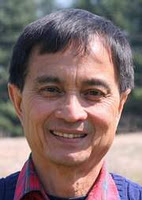
យើងសូមគាំទ្រលោកជួង ជូងីក្នុងការលះបង់គ្រប់យ៉ាងដើម្បីរក្សាច្បាប់ គឺរក្សាធម៌។ សូក្រាតសូ៑ស្លាប់ដើម្បីរក្សាច្បាប់គឺធម៌។ ព្រះពុទ្ធធ្វើទុក្ខរកិរិយាជិតនឹងស្លាប់ដើម្បីសែ្វងរកព្រះធម៌សំរាប់
សត្វលោក។
We support lawyer Choung Chou-ngy for his sacrifice in order to protect the law or the Dhamma.
Socrates accepted to die in order to keep the law or the Dhamma alive.
Lord Buddha practice self-mortification nearly die in order to search law or Dhamma for human kind.
May law or Dhamma be alive with all CAMBODIANS and their NATION!
ព្រះពុទ្ធសាសនាបានក្លាយជាគ្រឹះយ៉ាងមាំសំរាប់កម្ពុជា។ គេហទំព័រនេះនឹងចែកចាយពត៌មានទាក់ទងនឹងព្រះតេជគុណព្រះ គ្រូលួន សាវ៉ាតដែលកិច្ចការនិងសកម្មភាពរបស់ព្រះអង្គទាក់ទងនឹងការលើកស្ទួយសុខមាលភាព និងយុត្តិធម៌សង្គម ដោយក្រុមអ្នកស្រឡាញ់ព្រះពុទ្ធសាសនាខ្មែរ។
Buddhism has been the main foundation of Cambodia. This blog will attribute to Preah Krou Venerable Luon Sovath whose works and activities are engaging and promoting social wellness and justice by the group of Khmer Buddhist devotees.
Friday, December 30, 2011
Tuesday, December 27, 2011
Open letter to the public by EB
Dear Supporters and Friends;
The recent news reported by many media outlets in Cambodia about the criminal court order towards an oversea Khmer dissent named Suon Serey Ratha who is known for his movement called "Khmer People Power Movement or KPPM", by the court of Cambodia, has linked it to other two Cambodian Buddhist monks. According to news reported by Voice of Democracy (VOD) and Radio Free Asia (RFA), Venerable Sieng Sovannara, the vice abbot of Watt Samakii Rangsy of Mean Chey District, Phnom Penh city, was interrogated on a suspicion of his association with Suon Serey Ratha and Venerable Preah Krou Luon Sovath.
By this order and linkage, it means two Cambodian monks mentioned above, especially Preah Krou Luon Sovath, have involved in criminal accuse or indirectly threatening?
Note that Suon Serey Ratha is known for his sharp critics towards the government and he has led an anti-movement to topple the government by traveling to different countries to persuade Cambodian dissents to join his movement including his many trips in-and-out Cambodia. He is a naturalized American and a layman.
Venerable Sieng Sovannara is a Khmer Kampuchea Krom monk whose homeland is locating in Mekong Delta River which is well-known for fertile soil, rich Buddhism and ethnic Khmer population, but this region was taken over by the Vietnamese imperialist and the communist authority has violated their basic rights irreversibly. Last few years, a Khmer Kampuchea Krom monk named Tim Sakhorn, the abbot of Phnom Den pagoda, was defrocked by the Cambodian authority and handed him to Vietnamese authority to incarcerate in Vietnam for several years before he was released and asylumed in the third country.
Venerable Preah Krou Luon Sovath was primarily affected by the forced eviction and land grab in his home village. His two siblings were wounded by the gunshot and many villagers and neighbors were arrested by the authority. His compassion urged him to leave Phnom Penh city, his accommodation for university schooling, to help those siblings and neighbors. Finally, he got many warning from the authority, the order from provincial Buddhist leader, and the directive from the supreme patriarch of Cambodia. The directive from the supreme patriarch banned him from staying in any pagoda in the Kingdom as well as ordered all abbots not to allow Venerable Preah Krou Luon Sovath to stay in the pagoda.
Though perceiving of such frightening situation, Venerable Preah Krou Luon Sovath has still wandered to different directions entire the country to preach to those forced eviction villagers and the victims of land grab on the importance of using non-violence, be mindful and be patient to the problems. Those victims need both spiritual refuge and peace guidance from Venerable Preah Krou Luon Sovath.
For the recent linkage by the municipal court, we are doubtful on the intention of the court:
We do hope all NGOs, human rights organizations, world religious leaders, foreign embassies in Phnom Penh, the United Nations, international communities and peace-lover individuals, pay attention to this latest legal linkage of Cambodian authority towards Venerable Preah Krou Luon Sovath.
We do hope all living beings live together peacefully without discriminating or taking advantage from each other by their greed (Lobha), hatred (Dosa) or delusion (Moha).
May all beings be free from greed, hatred and delusion.
May Peace and Prosperity be with you all,
The recent news reported by many media outlets in Cambodia about the criminal court order towards an oversea Khmer dissent named Suon Serey Ratha who is known for his movement called "Khmer People Power Movement or KPPM", by the court of Cambodia, has linked it to other two Cambodian Buddhist monks. According to news reported by Voice of Democracy (VOD) and Radio Free Asia (RFA), Venerable Sieng Sovannara, the vice abbot of Watt Samakii Rangsy of Mean Chey District, Phnom Penh city, was interrogated on a suspicion of his association with Suon Serey Ratha and Venerable Preah Krou Luon Sovath.
By this order and linkage, it means two Cambodian monks mentioned above, especially Preah Krou Luon Sovath, have involved in criminal accuse or indirectly threatening?Note that Suon Serey Ratha is known for his sharp critics towards the government and he has led an anti-movement to topple the government by traveling to different countries to persuade Cambodian dissents to join his movement including his many trips in-and-out Cambodia. He is a naturalized American and a layman.
Venerable Sieng Sovannara is a Khmer Kampuchea Krom monk whose homeland is locating in Mekong Delta River which is well-known for fertile soil, rich Buddhism and ethnic Khmer population, but this region was taken over by the Vietnamese imperialist and the communist authority has violated their basic rights irreversibly. Last few years, a Khmer Kampuchea Krom monk named Tim Sakhorn, the abbot of Phnom Den pagoda, was defrocked by the Cambodian authority and handed him to Vietnamese authority to incarcerate in Vietnam for several years before he was released and asylumed in the third country.
Venerable Preah Krou Luon Sovath was primarily affected by the forced eviction and land grab in his home village. His two siblings were wounded by the gunshot and many villagers and neighbors were arrested by the authority. His compassion urged him to leave Phnom Penh city, his accommodation for university schooling, to help those siblings and neighbors. Finally, he got many warning from the authority, the order from provincial Buddhist leader, and the directive from the supreme patriarch of Cambodia. The directive from the supreme patriarch banned him from staying in any pagoda in the Kingdom as well as ordered all abbots not to allow Venerable Preah Krou Luon Sovath to stay in the pagoda.
Though perceiving of such frightening situation, Venerable Preah Krou Luon Sovath has still wandered to different directions entire the country to preach to those forced eviction villagers and the victims of land grab on the importance of using non-violence, be mindful and be patient to the problems. Those victims need both spiritual refuge and peace guidance from Venerable Preah Krou Luon Sovath.
For the recent linkage by the municipal court, we are doubtful on the intention of the court:
- Venerable Preah Krou Luon Sovath has not yet received official letter from the court for questioning and we would like to receive further explanation from the municipal court on this linking to his name.
- Venerable Preah Krou Luon Sovath is a Buddhist monk whose main task is to practice the Dhamma and to spread this Dhamma to others accordingly. He has never contended with any political figure or involved with any political tendency. He has never involved with the accused Suon Serey Ratha at all.
- He is a simple monk who has lived with the villagers. The monks make a living by the offering of the villagers, the villagers need spiritual refuge and peace guidance, monks must engage with them.
We do hope all NGOs, human rights organizations, world religious leaders, foreign embassies in Phnom Penh, the United Nations, international communities and peace-lover individuals, pay attention to this latest legal linkage of Cambodian authority towards Venerable Preah Krou Luon Sovath.
We do hope all living beings live together peacefully without discriminating or taking advantage from each other by their greed (Lobha), hatred (Dosa) or delusion (Moha).
May all beings be free from greed, hatred and delusion.
May Peace and Prosperity be with you all,
Friday, December 23, 2011
Vinaya or the rule of laws is important but they must be rightly articulated
Buddha taught his disciples that Vinaya or the rule of law is crucial for justice, peace, unity and advancement. However, Buddha stressed on right view and right understanding to duly implement their duty and obligation of this Vinaya. Whenever, the rule of law or Vinaya was created by a wrong view and wrong understanding, the greedy and the delusive will exploit this rule of law at the expenses of the bottom line people and the society will be inevitably apocalyptic.
Civil society or NGOs are the key player of social development. Civil society is the key actor in social, political and economic development in Cambodia. Civil society is the broker of this nation. In democratic countries, the government and civil society is inseparable and they are legally entitled to collectively work for the nation. They are guaranteed by the national constitution. In communist countries, civil society is strictly prohibited.
In Cambodia, many laws such as fishery laws, deforestion laws and corruption laws have become a tool for political supremacy. With this reality, how could one trust the upcoming civil society laws? This is the emergent question embedded in Cambodian mind and government must ensure that they have built trust for its citizens. If those laws are amended but never implemented or implemented for the greedy and the delusive, it is just a tool for modern political manipulation. We need right Vinaya and right practitioners in Cambodia.
Villagers petition via krama
- Chhay Channyda
- Wednesday, 21 December 2011
Photo by: Pha Lina
Villagers hold aloft a 230-metre krama yesterday during their protest in front of the National Assembly.Before submitting the petition, which weighed 50 kilograms, about 100 villagers from land-dispute communities and villages dependent on fishing and forestry stood alongside civil society representatives while holding the scarf and chanting.
“The citizens wanted the National Assembly to know that they are very concerned over draft laws which restrict their freedom,” Yeng Virak, president of Community Legal Education Center said.
Omlang villlagers who marched to the provincial court are admirable
Omlang villagers of Kompong Speu Province collectively marched towards to the provincial court in order to protest the court for its abusing of power in a land dispute between the investors and the farmers. Apparently, courts in Cambodia are notorious for its corruption and biases. Many decision makings by the courts, the winning will be rich people, powerful entities, foreign investors and Oknha or tycoons etc. For farmers and poor Cambodians, they have repeatedly disappointed by the court if their complains or legal procedures handed to the courts. If the Cambodian government which has been hybridized by half communist and half democracy is going to use legal domination to oppress on the weak by favoring the strong in its new face of political orchestration of instilling political supremacy in this very immature nation, the justice and peace will never prevail. Buddha advised us to lead a life with heedfulness, not carelessness. With this heedfulness, Omlang villagers who marched to the provincial court are admirable.
Saturday, December 17, 2011
Prey Lang prayer ban defied
By Phnom Penh Post
- May Titthara
- Thursday, 15 December 2011
Photo Supplied
Members of the Prey Lang network participate in a prayer ceremony yesterday at the Bayon Temple in Siem Reap in order to raise awarness of deforestation in the Kingdom. More than 100 villagers defied police attempts yesterday to break up a praying ceremony they held at Angkor Wat to seek divine help in their battle to stop the government from allowing private companies to destroy the protected Prey Lang forest.Svay Phoeun, a member of the Prey Lang network, which advocates for the protection of the forest, said officers from the Apsara Authority and police tried but failed to stop them from holding their ceremony at Bayon temple in the Angkor Wat complex.
“We still continued even though the police tried to block us, because what we did was not wrong,” he said.
The 360,000 hectare forest – Cambodia’s largest, spanning six districts in the provinces of Preah Vihear, Kratie, Stung Treng and Kampong Thom – is under threat from 33 separate economic land concessions that have been granted to private companies.
Duong Sovanara, a member of the Prey Lang network, said the group had chosen the Bayon Temple for their ceremony for two reasons – because it was a magic site and because it was somewhere they could draw the attention of passing tourists to the destruction of the forest.
“We would like to ask the government to find a quick resolution to prevent [the destruction of] Prey Lang, otherwise it will be destroyed quickly by private companies,” he said.
Thursday, December 15, 2011
CAMBODIA: The people must no longer wait for Preah Batr Dhammik to come to their rescue
FOR PUBLICATION
Op-Ed: Sophan Seng
AHRC-ETC-057-2011
December 15, 2011
An article by Dr. Gaffar Peang-Meth published by the Asian Human Rights Commission
CAMBODIA: The people must no longer wait for Preah Batr Dhammik to come to their rescue
Dr. Gaffar Peang-Meth
The end of 2011 is filled with less than happy news on Cambodia and her people that dampens the holiday mood. On the first of December, Radio Free Asia presented a somber broadcast on the culture of corruption permeating Khmer youth, starting with kindergarten children, the teaching corps, and moving up to education officials in government. Allegations of corruption at this foundational level do not bode well for Cambodia's future.
The report on corruption by RFA's Keo Pich Meta began with an illustrative Khmer saying "Tumpaeng snorng russei," which refers to bamboo shoots that will grow and replace aging bamboo trees. Bamboo shoots are the nation's future pillars. The saying counsels children to go to school, study hard, become educated, to help build a prosperous country.
RFA's report describes unspecified numbers of Khmer children and youth, the bamboo shoots, who are unlikely to grow up to become strong future pillars of a broadly prosperous society. They have fallen prey to societal ills, drugs, laziness, a lack of desire to learn, an avoidance of schooling, among other things. Of course there are children and youth going to school, the report says, but in the course of their schooling it has become customary to bribe teachers for better grades so students can move to the next level.
Having learned a culture of corruption at such a young age, these small bamboo shoots will probably carry the culture of societal ills with them as they grow.
Numbing the spirit, hurting the dignity
Neither was the news from Cambodia in November encouraging to those who advocate for Cambodians' civil rights. In late November, the small community of people of Boeung Kak Lake – those left from the original 4,000-plus residents who were victims of forced eviction – took to the streets to protest against the real estate firm Shukaku Inc., owned by ruling Cambodian People's Party Senator Lao Meng Khin. The people of Boeung Kak Lake were holding on desperately to the 12.44 hectares of land that remains after the lake and adjacent 120 hectares were co-opted by the government and leased for 99 years to Shukaku for development.

A nation of 14 million people, of whom 95 percent are Buddhist, Cambodians should be perfect actors for change. Their Lord Buddha preached, "To be idle is a short road to death and to be diligent is a way of life." He counseled men to be activists and "actionists." Do Cambodians who talk Buddha's talk, also walk his talk? As Buddha asked: "What good will do if you do not act upon them?"
Op-Ed: Sophan Seng AHRC-ETC-057-2011
December 15, 2011
An article by Dr. Gaffar Peang-Meth published by the Asian Human Rights Commission
CAMBODIA: The people must no longer wait for Preah Batr Dhammik to come to their rescue
Dr. Gaffar Peang-Meth
The end of 2011 is filled with less than happy news on Cambodia and her people that dampens the holiday mood. On the first of December, Radio Free Asia presented a somber broadcast on the culture of corruption permeating Khmer youth, starting with kindergarten children, the teaching corps, and moving up to education officials in government. Allegations of corruption at this foundational level do not bode well for Cambodia's future.
The report on corruption by RFA's Keo Pich Meta began with an illustrative Khmer saying "Tumpaeng snorng russei," which refers to bamboo shoots that will grow and replace aging bamboo trees. Bamboo shoots are the nation's future pillars. The saying counsels children to go to school, study hard, become educated, to help build a prosperous country.
RFA's report describes unspecified numbers of Khmer children and youth, the bamboo shoots, who are unlikely to grow up to become strong future pillars of a broadly prosperous society. They have fallen prey to societal ills, drugs, laziness, a lack of desire to learn, an avoidance of schooling, among other things. Of course there are children and youth going to school, the report says, but in the course of their schooling it has become customary to bribe teachers for better grades so students can move to the next level.
Having learned a culture of corruption at such a young age, these small bamboo shoots will probably carry the culture of societal ills with them as they grow.
Numbing the spirit, hurting the dignity
Neither was the news from Cambodia in November encouraging to those who advocate for Cambodians' civil rights. In late November, the small community of people of Boeung Kak Lake – those left from the original 4,000-plus residents who were victims of forced eviction – took to the streets to protest against the real estate firm Shukaku Inc., owned by ruling Cambodian People's Party Senator Lao Meng Khin. The people of Boeung Kak Lake were holding on desperately to the 12.44 hectares of land that remains after the lake and adjacent 120 hectares were co-opted by the government and leased for 99 years to Shukaku for development.

Friday, December 9, 2011
Protecting forest and trees mean to protect your life and the Dhamma
Arama or temple in Cambodian language derives from Arama Ropa Rokkha Ropa means a place which is full of trees and natural atmosphere. Trees and forest are very important for Buddhism. Lord Buddha were born in the forest, renunciation to live in the forest, attaining the Dhamma in the forest, and Parinibbana or passing away in the forest. Forest is very important for sustainable development, for biodiversity, for environment and for local residents to survive on the subsistence basis. But after the coming of capitalism, the hunt and thirst for raw material resources has made many corrupted officials and predatory developing countries have used many excuses to extract money from natural resources. This video clip is showcasing the excuse of Cambodian government in their effort to earn extra money by turning forest into land for concession in the political rhetoric of planning industrial development. Local people who have walked along march across the Prey Long forest, which is the last dense resort of Cambodian forest, to express their protest on the non-transparent concession of the Cambodian government. If you are Buddhists, protecting forest and trees mean to protect your life and the Dhamma.
Residents blocked road to protect their rights of owning land and housing
Buddha taught his disciples on the importance of attaining Vimutti and this Vimutti is the highest goal for Buddhists. Vimutti means liberation or absolute freedom. Absolute Vimutti refers to the eradication of greed, hatred and delusion. However, life of householders and general residents, Vimutti means full deserving of rights in living, housing and owning a land. It also includes other basic rights such as rights of speech and expression, and rights of social participation etc.
Below video clip broadcasted by RFA showcased the zero tolerance of Cambodian residents from Koh Kong province who have been so vigilant on searching temporary Vimutti and their collective action to block the road for resolution is critically visible.
Subscribe to:
Posts (Atom)